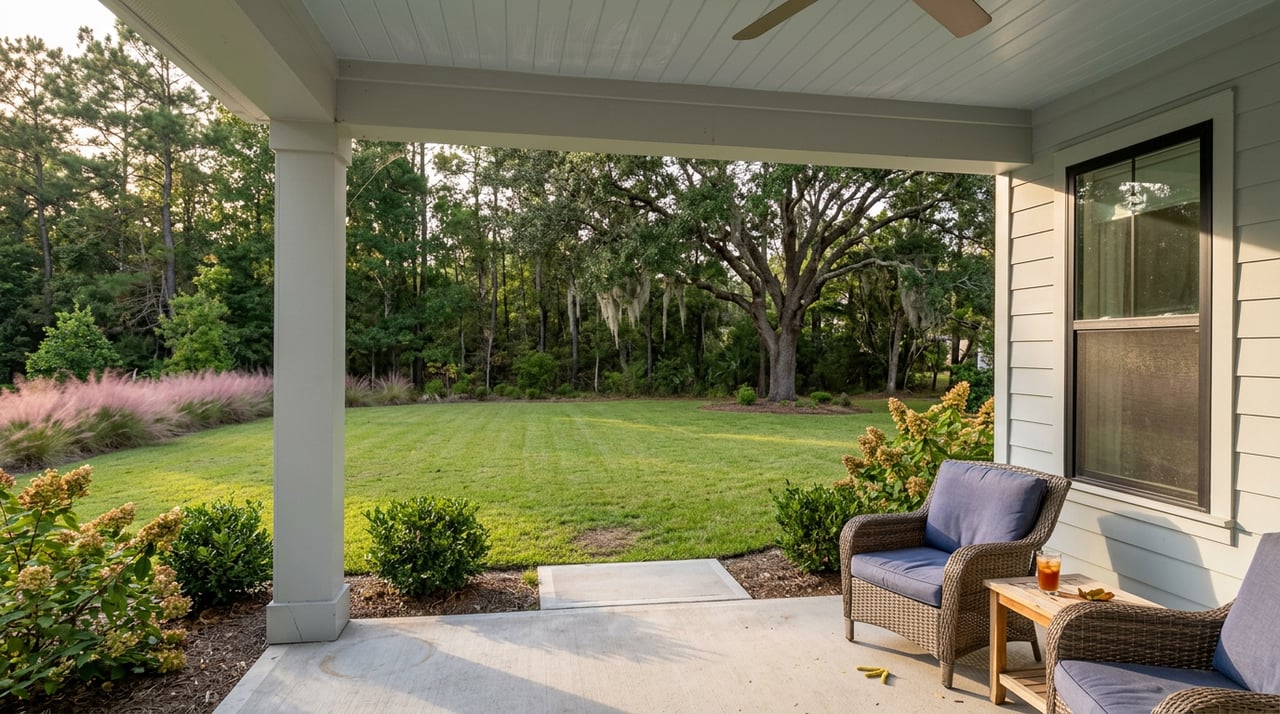
Pulte's Sea Island Preserve Build Process: Contracts, Design and Key Milestones
August 13, 2026
August 13, 2026
Buyers may focus on the day they sign the purchase agreement, while design selections and subsequent lender review can also affect the final price and the options available if plans change. Understanding that sequence before the design appointment can help buyers plan.
The sections below trace how those steps affect the timeline, pricing, and options available to buyers.
Buyers walk into a Pulte contract assuming it behaves like a resale contract: you sign, you inspect, you close. New construction follows a different sequence, as Pulte's homebuilding guide explains. Signing the purchase agreement starts your financing process. It does not finish it. Once you complete your design appointment, your lender has to approve a new total purchase price built around whatever you selected, which means the number you signed for on day one is a placeholder, not a final figure.
A few assumptions are worth checking against what actually happens:
| Common expectation | What the process involves |
|---|---|
| Signing the purchase agreement is the point of no return | The agreement starts financing. Your lender still has to approve a revised purchase price once your design selections are final. |
| Earnest money works like a resale deal, roughly 1 to 3 percent | Pulte's own new-construction guidance tells buyers to plan on setting aside 5 to 10 percent of the home's value, a different number than most move-up buyers expect. |
| Construction begins the day you sign | Permits often cannot be submitted until electrical, plumbing, and structural selections are finalized, so the studio appointment is what starts the build clock, not the signature. |
The table highlights how the purchase agreement, design selections, and financing fit into the process. Signing begins financing; final design selections may affect the total purchase price and the choices available under the contract.
Design selections can affect the plans used for permitting and construction. A builder cannot pull permits for a house whose electrical layout, gas lines, and structural add-ons are still undecided. County and city permitting requires final plans. So the studio appointment, the one that feels like picking paint chips, is the appointment where your electrical plan, your plumbing rough-in, and your structural options get fixed on paper. Once that happens, the builder submits for permits, orders material, and starts treating your file as a real construction job rather than a reservation.
The design appointment may also involve a substantial payment. Review the contract's refund terms before the appointment. Finishes may be special-ordered and hard to resell to another buyer if you walk.
The difference between the two deposit ranges can be substantial. A buyer expecting a 2 percent resale-style deposit is planning for a low five-figure amount. Pulte's own guidance, aimed specifically at new construction rather than resale, suggests 5 to 10 percent as the realistic range instead. On a build priced around $700,000, a common band for this community, the higher range can mean a deposit that clears $50,000.
During construction, Pulte's build process runs on a fixed meeting cadence rather than open-ended check-ins. The company calls it the Build Quality Experience, and it runs through four scheduled touchpoints:
Sea Island Preserve's own community page lists the mechanics that shape ongoing cost once you are past closing. The gated community holds roughly half its total acreage as parks and conservation land rather than additional homesites, and Pulte describes the homesites themselves as estate-sized, a different footprint than the tighter production lots common elsewhere on the island. HOA dues here are billed quarterly and already bundle high-speed internet and cable television through Spectrum, a cost that a straight price comparison against an older resale home will not capture unless you back out what the resale owner is paying separately for the same services.
Financing incentives currently listed on Pulte's own Sea Island Preserve page include up to 2 percent of closing costs covered when a buyer uses Pulte Mortgage Finance, plus an additional $2,000 for teachers, nurses, EMS, police, firefighters, and active or retired military through the builder's Hometown Heroes program. Both are worth pricing against an outside lender's full rate sheet before assuming the in-house option is automatically the better deal. A 2 percent closing cost credit is real money. It is also only worth taking if the rate and terms attached to it beat what an independent lender offers on the same loan.
The relationship does not end at the final walkthrough. Pulte backs new construction with a 10-year limited structural warranty, and separately schedules a Built-to-Last follow-up meeting before your first year of ownership ends, where the customer care team checks the home's actual performance against expectations rather than just processing routine service requests. That checkpoint is worth using deliberately to flag settling, drainage, or finish issues that only show up after a full Lowcountry summer and a full winter have tested the house.
Can I use my own lender instead of Pulte Mortgage? Yes. The current closing cost credit is tied to financing through Pulte Mortgage, so an outside lender needs to be compared on total cost, not just the advertised rate, before you decide which route actually saves money.
What happens to my earnest money if I back out after my design studio appointment? Check your contract's refund terms and ask which milestones affect your deposit.
Does the HOA add cost beyond the mortgage payment? Yes. Dues here are billed quarterly and currently include bundled Spectrum internet and cable, which changes how a monthly cost comparison against an older resale home should be run.
At Sea Island Preserve, the purchase agreement, design selections, and later walkthroughs each mark a different stage of the build. Anthony Barrasso works with buyers through that sequence, from the purchase agreement through the pre-drywall walkthrough, to help them prepare for the design appointment.
Let's Connect before your design appointment, not after.
This article is general information, not legal, tax or financial advice. Consult a qualified professional about your situation.
Stay up to date on the latest real estate trends.

Experience the confidence that comes from working with a seasoned Broker committed to protecting your goals and delivering exceptional results. Contact Anthony today to start your home searching journey!