Oyster Season on the Stono: What Gift Plantation Boaters Should Know This Fall
October 22, 2026
October 22, 2026
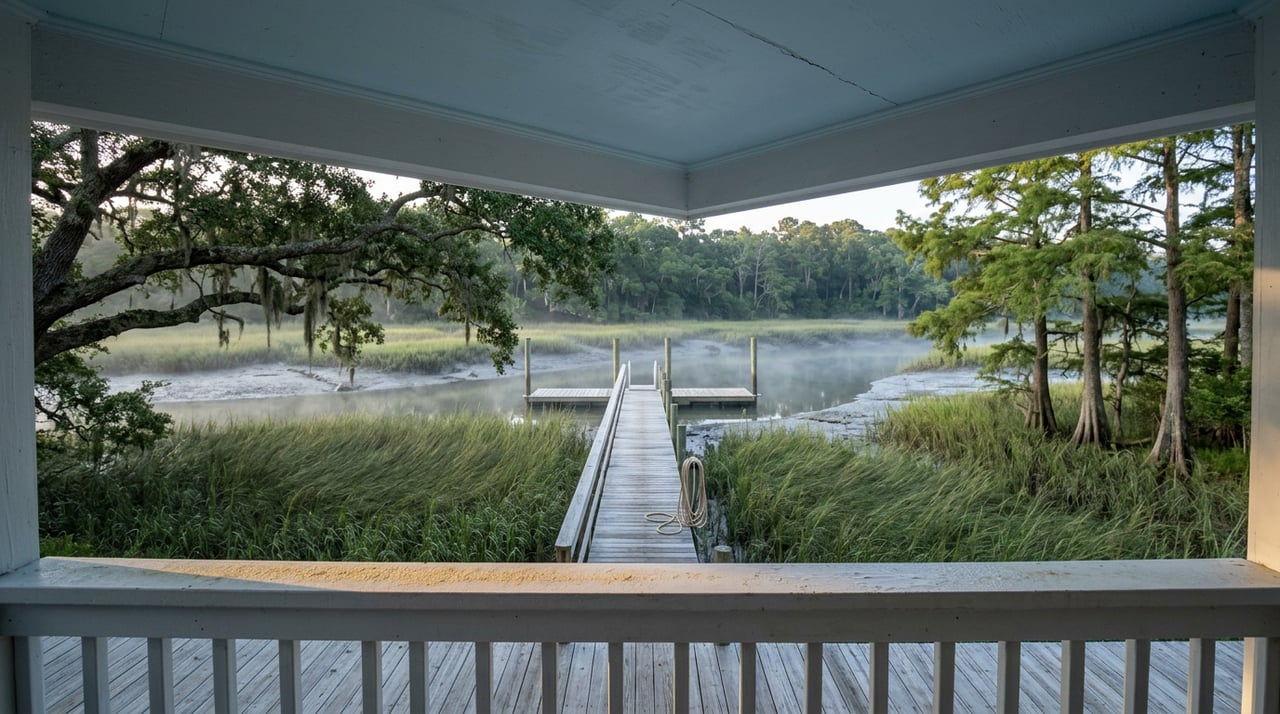
By the last Thursday in October, the recreational oyster season on the Stono River is four weeks old. The South Carolina Department of Natural Resources opened clam and oyster harvest half an hour before sunrise on Thursday, October 1, 2026. The season is scheduled to run through May 15, 2027, and it can be extended or shortened depending on conditions. Gift Plantation's residents' association describes the community as sitting on the banks of the Stono, looking out on the Intracoastal Waterway, with a community dock. That makes this season close to home, but the river in view is not where the open harvest grounds are. On the Stono, oyster season is a loop. The legal grounds are downriver and partly closed this year. The shell you bring home after a roast is the same material now building new reef along the Stono's eroding banks.
SCDNR's 2026–27 Charleston South grounds sheet lists the public and state grounds that serve the waters south of the harbor. Recreational harvest is only allowed on these designated grounds, and only in areas the state classifies as open or approved for water quality.
| Ground | Waterway | 2026–27 status on the SCDNR sheet |
|---|---|---|
| R-186 | Kiawah River | Public ground |
| R-193 | Green Creek | Public ground |
| R-201 | Folly River | Public ground |
| S-187 | Bohicket Creek | State ground, partially closed by SCDES |
| S-194E | East Kiawah River | State ground, partially closed by SCDES |
| S-194W | West Kiawah River | State ground |
| S-201 | Folly River | State ground |
S-194E matters most to anyone launching on the Stono. SCDNR's map, dated September 2026, puts the ground in SCDES Shellfish Management Area 11. It covers Bass Creek, Cinder Creek and parts of the Stono and Kiawah Rivers, and it is labeled "Partially Closed SCDES" for the 2026–27 season. The map shows that part of the ground is closed but does not explain which parts or why. That is why this season comes with a step before you head out.
SCDNR tells harvesters to check the SCDES Shellfish Closures map or call 1-800-285-1618 before they go. Closures can change quickly. After heavy rain this month, ABC News 4 reported that SCDES closed harvest areas 08 and 9A at sunset on October 5. Those areas run from Anderson Creek and southern Bulls Bay south to Charleston Harbor. On October 14, the station reported the beds had reopened after water-quality testing. That closure was not on the Stono. It still shows that one rainy week can close a stretch of harvest ground for nine days, and the printed season dates won't tell you.
The rules come from SCDNR's recreational shellfish regulations page, and they are worth reading in full. As that page states them:
That page also carries a generic season line that runs through May 27. SCDNR's dated 2026–27 announcement and its current maps give May 15, 2027. SCDNR also asks harvesters to "cull in place," leaving dead shell and smaller oysters on the shoreline and taking only larger clusters or singles. The agency presents this as best practice. The reason becomes clearer a little upriver.
In March, Live 5 News reported the start of a multi-year living shoreline project on the Stono. The partners are Charleston Waterkeeper, SCDNR's South Carolina Oyster Recycling and Enhancement program, known as SCORE, and Cummins Inc. The long-term goal is 7,000 square feet of living shoreline. The first-year plan for Restoration Project Site 1, about 259 meters of shoreline, called for volunteers and partners to build and install 354 manufactured wire reefs and plant 5,000 Spartina plugs.
Charleston Waterkeeper executive director Andrew Wunderley explained the pressure on the river to Live 5:
"The Stono River is kind of sandwiched between two threats. One is that you have a lot of growth on Johns Island and West Ashley, and that means impervious surface cover; it means every time it rains or floods all that dirty water drains into the Stono River."
That runoff is what triggers rain closures like the one this month. In September, Live 5 followed up and reported that hundreds of volunteers had helped build reefs and plant thousands of marsh grass plugs. New oyster growth was covering the wire reefs a little more than a year after they went in. SCDNR estimates each reef can recruit about 7,000 adult oysters. According to the same report, a single adult oyster filters about two and a half gallons of water an hour.
For anyone running a boat out of Gift Plantation, one line in that story is direct. Wildlife biologist Aiden Richter told Live 5 that boat traffic and storms wear away the marsh, and that oysters "stop that wave energy and kind of lock in that marsh to where it's at." The reefs work as a breakwater, and the shell inside each one tells oyster larvae where to settle.
Reefs like these need shell, and the state is short of it. SCDNR says shucked shell more often than not ends up in driveways and landfills, and the state has had to buy most of its planting shell from out-of-state processors. SCDNR asks people not to put freshly shucked shell back into South Carolina waters. Recycled shell goes to SCORE and is quarantined for six months before it is reused. Anything placed in an SCDNR bin becomes state property, and taking shell back out is illegal.
There are two drop-off sites close to the island:
Bin locations change, so check SCDNR's statewide SCORE recycling map before a big haul. Its data layer was last updated October 15, 2026. If you are trailering, the state's boat landing list shows John P. Limehouse Landing, off Main Road on the Stono, as a public ramp. Buzzard's Roost on Maybank Highway is listed as private.
You don't need a boat to take part this fall. Every roast below produces a pile of shell that can go back to SCORE.
| Date | Event | Where | Tickets |
|---|---|---|---|
| Sat., Nov. 14 | A Very Merry Oyster Roast, Charleston County Parks Foundation | Wando Shelter, James Island County Park, 871 Riverland Drive | $65 |
| Sat., Nov. 14 | Shuck & Social, Red Top Improvement Association | McNeal Park & Playground, 3719 Old Charleston Road, Johns Island | $30 advance, $35 day-of |
| Sun., Nov. 15 | The Point's 12th Annual Oyster Roast, Chili & Mac-N-Cheese Cook-Off | Rockville | Listed as sold out |
| Fri., Nov. 27 | Mingo Point Thanksgiving Oyster Roast & BBQ, Kiawah Island Golf Resort | Mingo Point, 876 Kiawah Island Parkway | $65 adults, $32 ages 4–12, free for 3 and under |
A Very Merry Oyster Roast is a fundraiser for the parks foundation. Johns Island's own Shuck & Social is the less expensive option on the same Saturday. The Mingo Point roast sells two seatings, 4 to 6 p.m. and 6:15 to 8:15 p.m., and it sits on the Kiawah River, near the grounds listed above.
Sweetgrass Garden, at 3121 Plow Ground Road on Johns Island, is also holding its fundraiser roast in November. The Post and Courier's 2026–27 roast roundup lists the date and details as still to come. Last year's roast was held on Saturday, November 22, 2025. If you would rather work on the reef itself, Live 5's coverage of the Stono project points readers to charlestonwaterkeeper.org to learn how to volunteer.
The harvest rules above are reported from SCDNR and SCDES for general information only. They are not legal advice, so confirm licensing, limits and closures with those agencies before each trip.
If you own on the Stono and want to talk through how the river and its marsh edge figure into your property, Anthony Barrasso is glad to sit down with you. Let's Connect.
Stay up to date on the latest real estate trends.

Experience the confidence that comes from working with a seasoned Broker committed to protecting your goals and delivering exceptional results. Contact Anthony today to start your home searching journey!