Your Guide to Fenwick Hall Plantation Johns Island Real Estate
July 23, 2026
July 23, 2026
A buyer sends me a search alert for "Fenwick Hall Plantation" and asks why the results range from a $289,900 one-bedroom condo to a $1.9 million marshfront custom build. It is a fair question. The listings all sit within a mile of the same traffic light at Maybank Highway and River Road, they all borrow the same eighteenth-century name, and portal filters treat them as one neighborhood.
They are not one neighborhood. They are at least five separate subdivisions with different HOAs, different builder pools, different dock rights, and very different resale mechanics, clustered around a private house that is not for sale and never has been. If you write your offer against the wrong comp set, you either overpay for a condo tier or underprice a custom tier that is not soft, only slow by design.
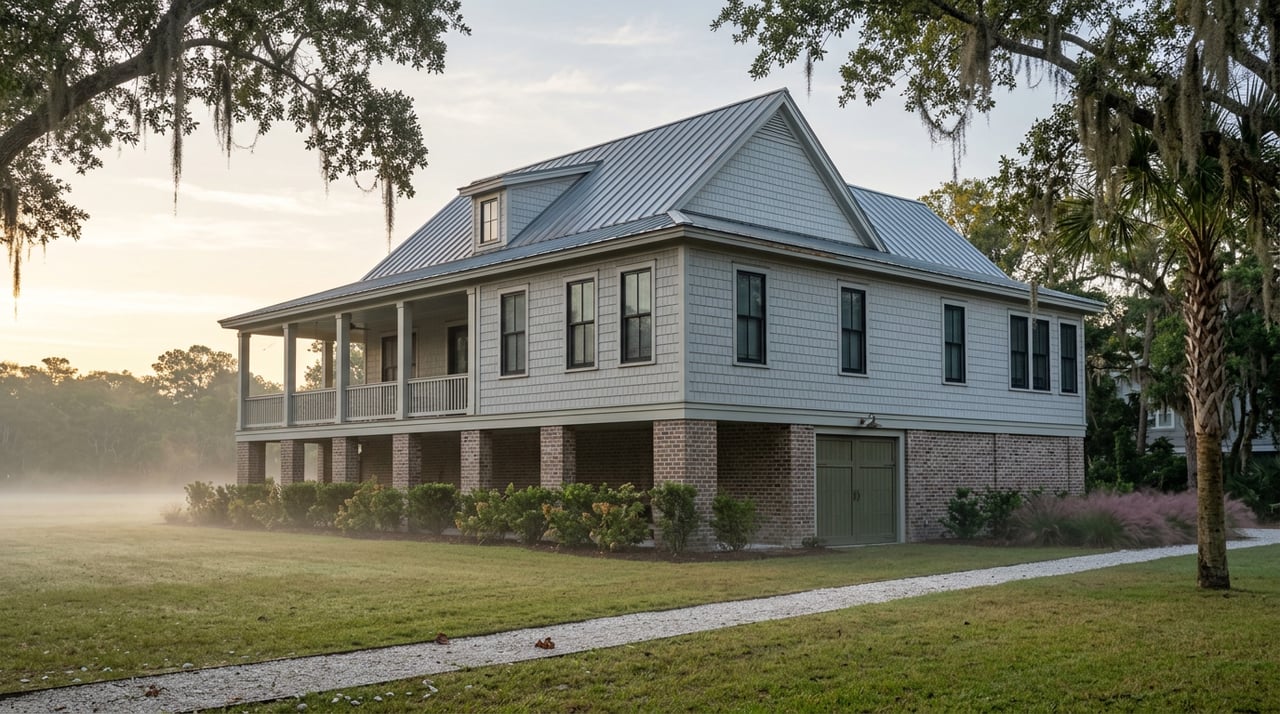
Fenwick Hall, also known as Fenwick Castle, is a plantation house built about 1730 on Johns Island, South Carolina, across the Stono River from James Island and Charleston. It sits between River Road and Penneys Creek and was added to the National Register of Historic Places on February 23, 1972. The Library of Congress describes it as one of the preeminent eighteenth-century brick plantation houses in the South Carolina Lowcountry.
None of that makes it a community amenity. The main house was restored in the 1930s and is currently a private home. Victor and Marjorie Morawetz of New York acquired the house in the 1930s and retained Charleston architect Albert Simons to restore it after a long period of neglect, a project widely credited as an important contribution to the modern historic preservation movement in Charleston. The address most buyers eventually stumble across, 30 Fenwick Hall Allee, is a residence. There is no gate, no clubhouse, no shared dock attached to it.
That matters because every subdivision within a mile of the house borrows the name. When a listing description says "in the historic Fenwick Hall neighborhood," it is telling you geography, not entitlement.
Here is what the "Fenwick" umbrella actually contains as of mid-2026, organized by product type rather than by marketing:
| Subdivision | Typical product | Approximate price band | Who builds or resells |
|---|---|---|---|
| The Gates of Fenwick Plantation | Condos and small townhomes | ~$290K to ~$420K | Resale, existing inventory |
| Fenwick Commons | Townhomes | ~$300K to ~$500K | Resale |
| Twelve Oaks | Condos with garages | ~$300K to ~$450K | Resale |
| Fenwick Hills | Single-family detached | ~$500K to ~$750K | Resale |
| The Preserve at Fenwick Plantation (Penny's Creek) | Semi-custom and custom single-family | ~$945K to ~$1.92M | Brightwater Homes, Port City Homes, small custom |
Two data points anchor the top end. As of February 2026, The Preserve at Fenwick Plantation had eleven MLS listings with an average price of $1,610,632, a high of $1,920,000, and a low of $945,000. The average house size in that subdivision was 3,168 square feet, and the average days on market was 396.
Set that against the broader island. As of June 30, 2026, Johns Island had 276 active listings with an average of 74 days on market and a median list price of $739,995. The Preserve carries roughly twice the median price and more than five times the days on market. Read at face value, that looks like a weak segment. It is not. It is a different kind of market.
The Preserve at Fenwick Plantation is a build-to-order subdivision with a handful of small builders working from a fixed inventory of lots. A representative active listing at 1628 John Fenwick Lane is a semi-custom new construction home by Port City Homes with a seller-offered incentive for an interest-rate buy-down. The subdivision also currently carries a bulk sale of seven residential lots averaging just over 12,000 square feet, offered as a small builder opportunity.
That structure produces long DOM figures for reasons that have nothing to do with buyer interest:
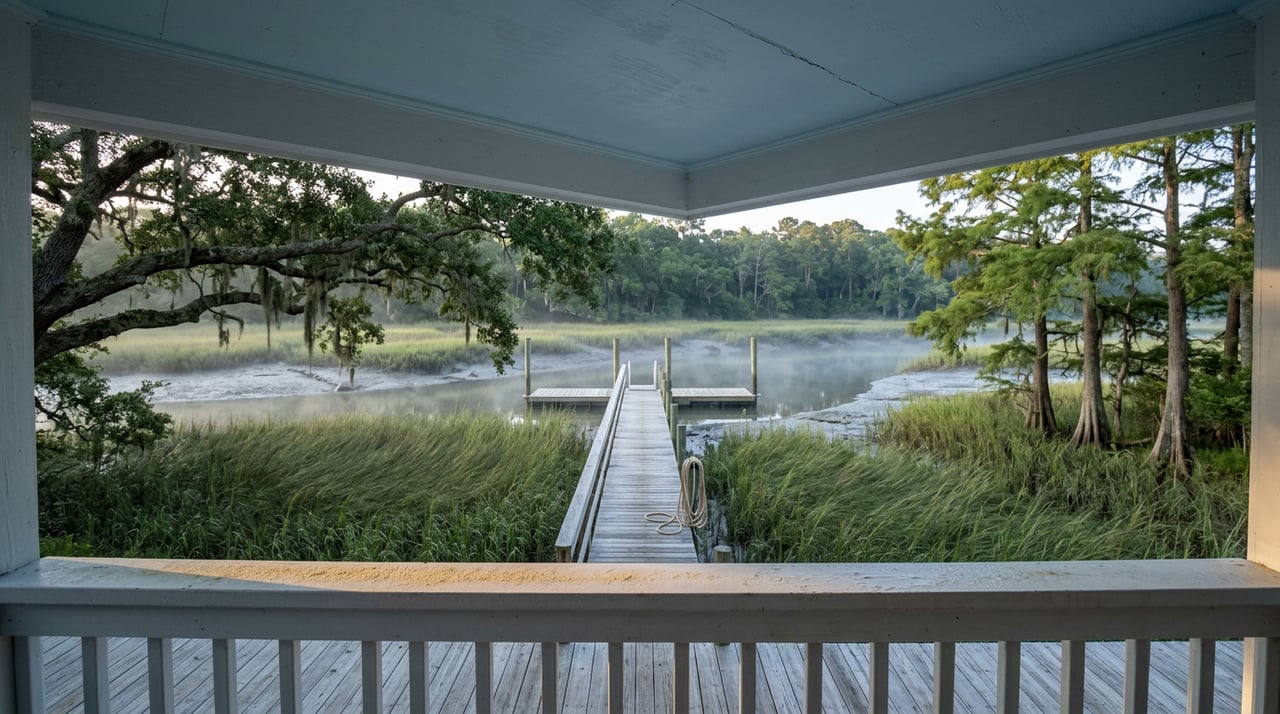
If you underwrite the Preserve against Johns Island's 74-day median DOM, you assume the seller is tired. In this segment the seller is a builder with a warranty, a design center, and a construction loan that is priced into the sticker. That is a very different negotiating posture. The community amenities themselves, including a community dock for boating, kayaking, crabbing and fishing, a pavilion and gathering spaces, scenic ponds, walking trails, and preserved green areas, are already delivered, so there is no phase-two amenity risk to price against either.
This is where the shared name causes the most expensive confusion. The Preserve at Fenwick Plantation has a community dock. The Gates of Fenwick Plantation, Fenwick Commons, Twelve Oaks, and Fenwick Hills do not. A buyer touring a $360,000 townhome in the Gates who assumes she is buying into the same water access as a $1.5 million Preserve home is buying a different asset.
Before you write, verify three things at the specific subdivision, not the umbrella:
The blanket phrase "community amenities" in a listing description is not a substitute for a covenants and restrictions review.
The mistake I see most often on this corridor is a buyer or an out-of-market agent pulling comps by ZIP code and subdivision name. Charleston Trident MLS carries "Fenwick" in more than one subdivision label, and portal search fields default to fuzzy matches. That produces a comp report where a 1,824-square-foot end-unit townhome sits three lines above a 3,524-square-foot elevated marshfront home, and the "average price per square foot" figure at the bottom of the report is meaningless.
A representative townhome tells the story. 1282 Fenwick Plantation Road is a 2 bed, 2.5 bath, 1,824 square foot townhome in the Fenwick Hall neighborhood, sitting as an end unit backing up to woods, with a screened-in back porch and a privacy-fenced backyard featuring an outdoor stone fireplace. That is a fee-simple attached product with a maintenance-driven HOA.
Now compare it to the tier a mile north. A representative Preserve listing is a 3,430 square foot new construction home with four bedrooms and four and a half bathrooms, a primary suite on the main level overlooking marsh views, a screened porch, an elevator shaft, a two-car garage, and access to Brightwater Homes' curated design process. Same MLS field for "subdivision" if the agent is sloppy, entirely different underwriting.
A defensible comp set inside the umbrella almost always narrows to one of the five sub-neighborhoods, sometimes to a single street. If the comp report you are shown has a price range wider than two-to-one, the comps are wrong.
The macro number is not doing what the headlines say. Redfin reported that in February 2026, Johns Island home prices were down 6.4% compared to last year, selling for a median price of $633K. The median sale price per square foot was $307, up 8.9% since last year.
Read those two lines together. A falling median with a rising price per square foot means the mix is shifting toward smaller, denser product, not that individual homes are losing value. That is exactly what the "Fenwick" umbrella reflects in miniature. Entry-tier townhome and condo inventory is turning fast at attainable prices, while custom builds hold on longer at higher prices per foot. Both can be true at once, and both are.
No. It is a private residence. Public documentation of the building lives at the Library of Congress under the Historic American Buildings Survey and at fenwickhallstory.com, which the current owners maintain.
The house sits between River Road and Penneys Creek, and the Preserve at Fenwick Plantation is sometimes marketed as "The Preserve at Penny's Creek." They are the same subdivision. The dual naming is a marketing choice by individual listing agents.
Only if you treat it as a demand signal. In a build-to-order community, DOM measures how long lots and proposed builds sit on the MLS, not how long finished homes wait for offers. Ask for DOM restricted to closed sales of completed homes if you want a demand read.
No. Fenwick Hills is a separate single-family subdivision inside the same corridor. It shares a name and a ZIP code with the historic house and nothing else.
If you are trying to price an offer inside the Fenwick corridor, or trying to decide whether the Preserve's build-to-order economics fit your timeline, that read is worth having in advance rather than after a comp report has already anchored the number. Anthony Barrasso works these subdivisions directly and can walk you through which name on the listing actually matters. Let's Connect.
Stay up to date on the latest real estate trends.

Experience the confidence that comes from working with a seasoned Broker committed to protecting your goals and delivering exceptional results. Contact Anthony today to start your home searching journey!