The Ten-Slip Problem: What "Waterfront Community" Actually Means Inside Stonoview's Gate
August 6, 2026
August 6, 2026
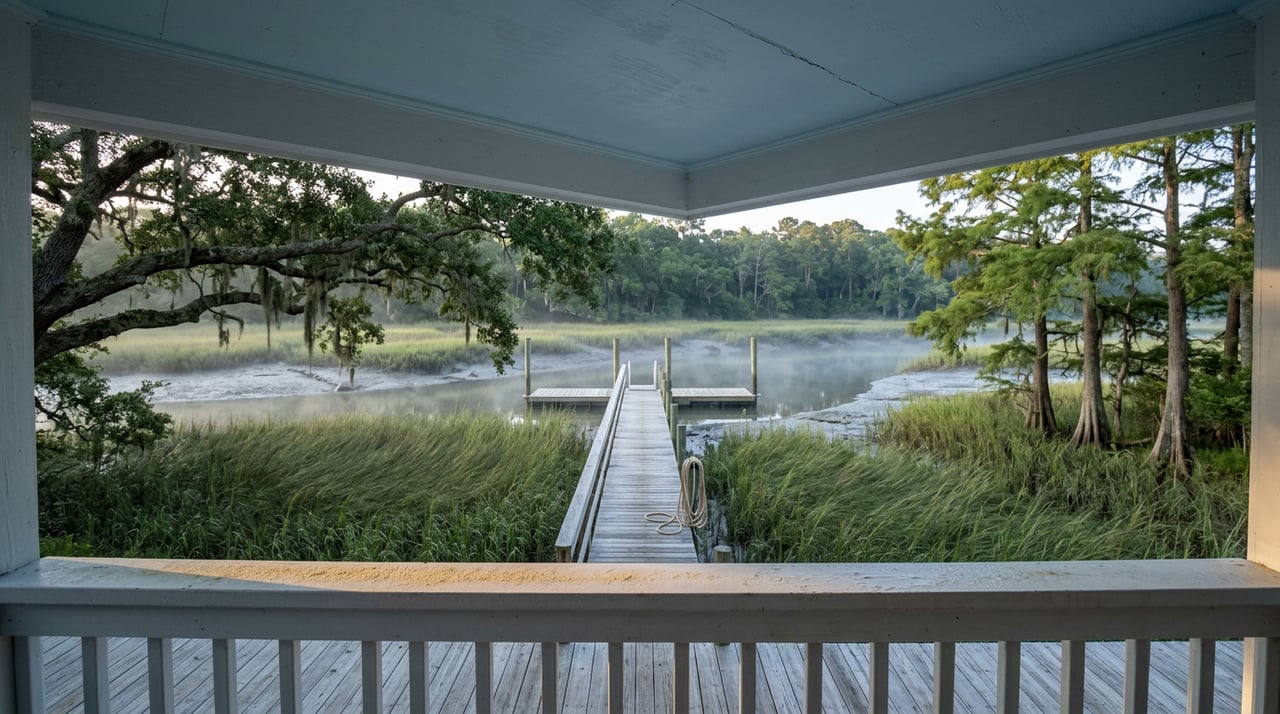
Stonoview markets itself as one of Johns Island's premier waterfront communities, and the listings back that up. The deep-water dock on the Stono, the sundeck, the oyster pavilion, the floating docks that appear in nearly every photo set. The number that rarely appears in a listing is the one that matters most for how these homes price and trade.
The community was master-planned around 371 homesites. The community dock holds roughly ten boat slips and about 240 linear feet of dockage. That ratio, not the square footage or the finish level, is doing most of the work inside the gate.
Ten slips distributed among 371 households is a rationing problem, not an amenity. A little under three percent of homeowners can hold a slip at any given moment. Everyone else uses the same dock as a shared consumption good: sunsets, crabbing, kayak launches, a place to walk at low tide.
That is not a criticism of the community. Shared deep-water access on the Stono is genuinely hard to find at Stonoview's price band. But the mechanism explains a lot about how the market behaves.
Stonoview's dock is a shared consumption good with a rationing rule. It is not a deeded asset attached to any particular lot. When a buyer prices a Stonoview home as if boat access travels with the deed, they are pricing an option they may never be able to exercise.
Reading across active Stonoview listing copy, the amenity package that comes with the HOA is consistent and worth stating cleanly, because most buyers merge these into a single mental image of "waterfront living":
The first two lines are the scarce goods. The rest is capacity that scales reasonably well with a 371-home community. When a Stonoview home commands a premium over an equivalent interior Johns Island build, that premium is paying for the first two lines and for proximity to them.
The mid-2026 snapshot inside Stonoview reads roughly like this: about ten active single-family listings, an average list price near $1.03 million, a price range from the low $800s to just under $1.4 million, average home size close to 2,900 square feet, and average days on market around thirty-one. A second aggregator running slightly different filters shows an average nearer $972,000 and a top of the range around $1.25 million, which is a reminder that Stonoview's list-price average moves meaningfully with just a handful of high-end additions.
Two homes with similar square footage and similar finish level can sit several hundred thousand dollars apart inside the same gate. The variable that best explains the spread is not the kitchen. It is the lot's relationship to the dock and the river.
| Lot type inside Stonoview | What the buyer is actually paying for |
|---|---|
| Interior pond or wooded lot | Access to the community amenities on the same terms as everyone else, plus the address premium of a waterfront-branded community |
| Marsh or Stono River view lot | The daily visual value of the view, which is durable regardless of slip availability |
| Lot within walking distance of the dock and pavilion | Functional proximity to the scarce good, which raises the probability that the amenity gets used often enough to justify the HOA |
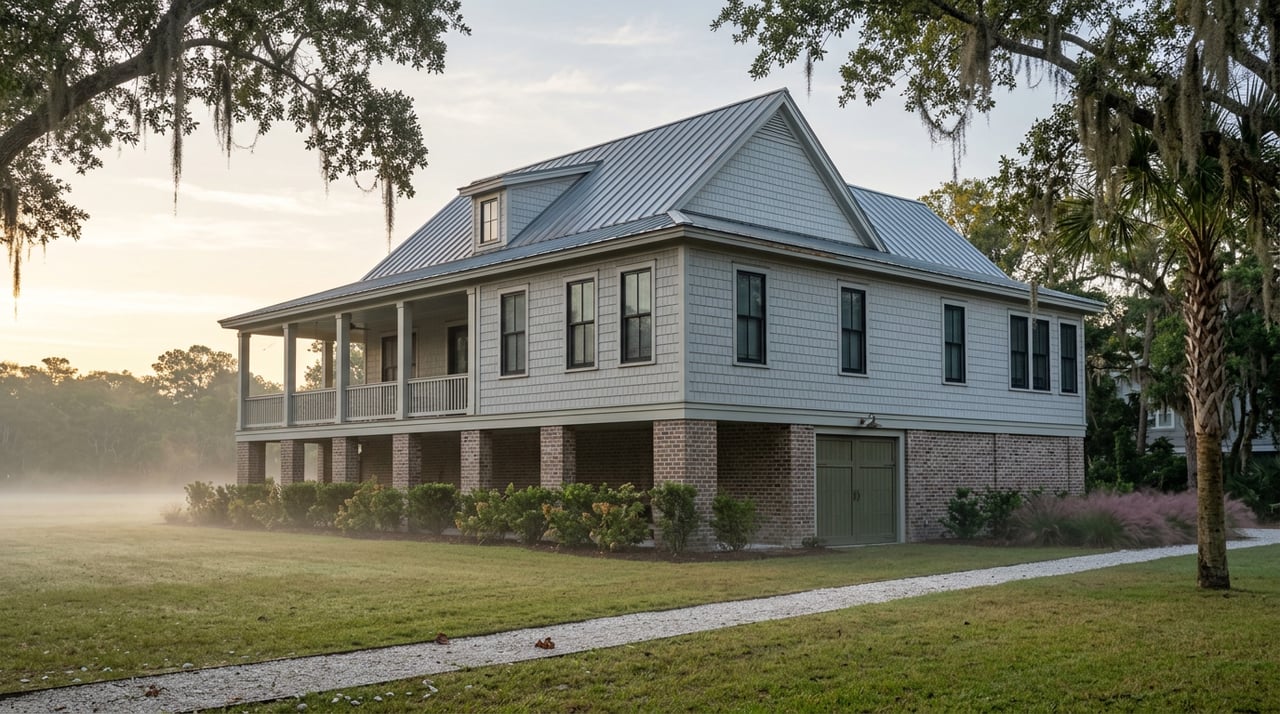
| Elevated home with covered parking for boat and trailer | An on-lot solution to the slip scarcity, since a trailered boat and a nearby public ramp bypass the queue entirely |
None of these tiers is better or worse. They are different products with different underlying value. The mistake is comparing a river-view listing to an interior pond listing as if the delta is finish level.
The move-up buyer comparing Johns Island waterfront communities is usually looking at three or four places at once. The dock mechanism is different in each, and that difference is where most of the confusion lives.
Rushland Plantation runs a similar community-dock model at a lower density and a wider price band, which means the ratio of households to shared water access is more forgiving in some tiers and much tighter in others. A buyer who reads Rushland's community dock as equivalent to Stonoview's is missing the density difference.
Gift Plantation solves the same problem in the opposite direction. Deepwater access there is a lot-level and permit-level question rather than a queue at a shared dock. Two Gift Plantation listings on the same street can carry very different water rights because the dock master plan treats them differently. A buyer comparing Stonoview's ten slips to a Gift Plantation deepwater lot is comparing a shared amenity to a private one, and they should be priced as different asset classes.
Headquarters Island unbundles the question entirely. The neighborhood sits close enough to St. Johns Yacht Harbor that a homeowner can hold a slip at the marina and never depend on a community dock at all. That structure lets the neighborhood price homes independently of shared water access. Stonoview, by design, does the opposite.
Reading these four gates as one waterfront category is the most common expensive mistake on Johns Island. They are four different pricing structures around water.
The questions below are worth working through with a broker before an offer, because the answers change the value of the house you are looking at:
Each of these questions has a factual answer that the HOA and the county can provide. They belong in the diligence packet, not in the first tour.
Stonoview at mid-2026 is a well-built community with a legible pricing structure once you see the mechanism. Homes in the mid to high $800s tend to be interior lots and pond lots where the buyer is paying for the address, the amenities used on shared terms, and the underlying construction quality. Homes moving toward and above $1.2 million tend to carry a marsh or river view, elevated construction, or a proximity advantage to the dock and pavilion. The 31-day average days-on-market figure sits well below what a soft market would produce, which suggests the community is trading in balance rather than in distress.
The move worth making, if you are a buyer, is to decide before you tour which of the four tiers you are actually shopping. If the water is the point, price the marsh and river-view homes against Gift Plantation deepwater and against Headquarters Island with a marina slip, not against interior Stonoview lots. If the community feel is the point, the interior lots are the more efficient purchase, and the dock is a bonus rather than the reason to buy.
For a seller, the read is close to the mirror image. A river-view home that is priced against interior comps inside the same gate is leaving money on the table. An interior home that is priced against river-view comps is the one that sits.
No. The slips at Stonoview's community dock are a shared amenity administered by the HOA, not a right that travels with any particular lot. A buyer inheriting a slip from a seller should verify the HOA's transfer rules in writing before closing.
On most Stonoview lots the community dock is the intended water access plan, and private docks are not part of the master plan. Any buyer expecting to permit a private dock should verify feasibility with the HOA and the applicable state and federal permitting bodies before writing an offer, not after.
As a factual description of the neighborhood, not a factual description of the specific lot's water access. The listing is telling you that the address sits inside a community organized around the Stono. It is not telling you that the house comes with a slip, a view, or a private dock. Those are separate questions worth asking on the first tour.
If you are weighing Stonoview against the other Johns Island waterfront options, or trying to read a specific listing against the right comp set, Anthony Barrasso works through the diligence packet with you before the offer, not after. Let's Connect.
Stay up to date on the latest real estate trends.

Experience the confidence that comes from working with a seasoned Broker committed to protecting your goals and delivering exceptional results. Contact Anthony today to start your home searching journey!